
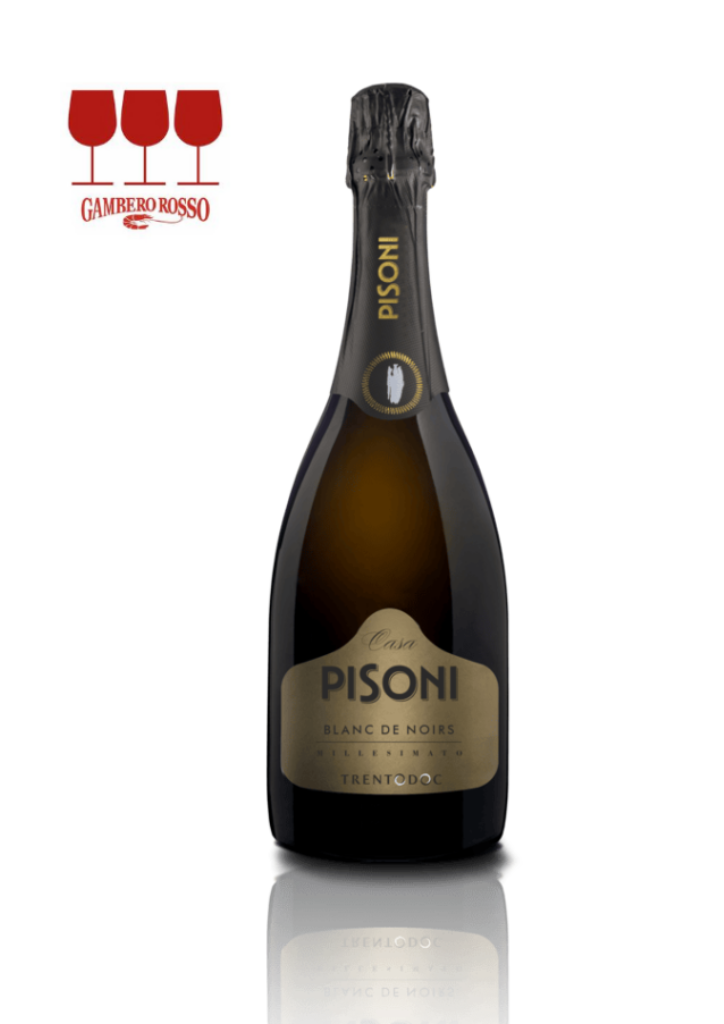
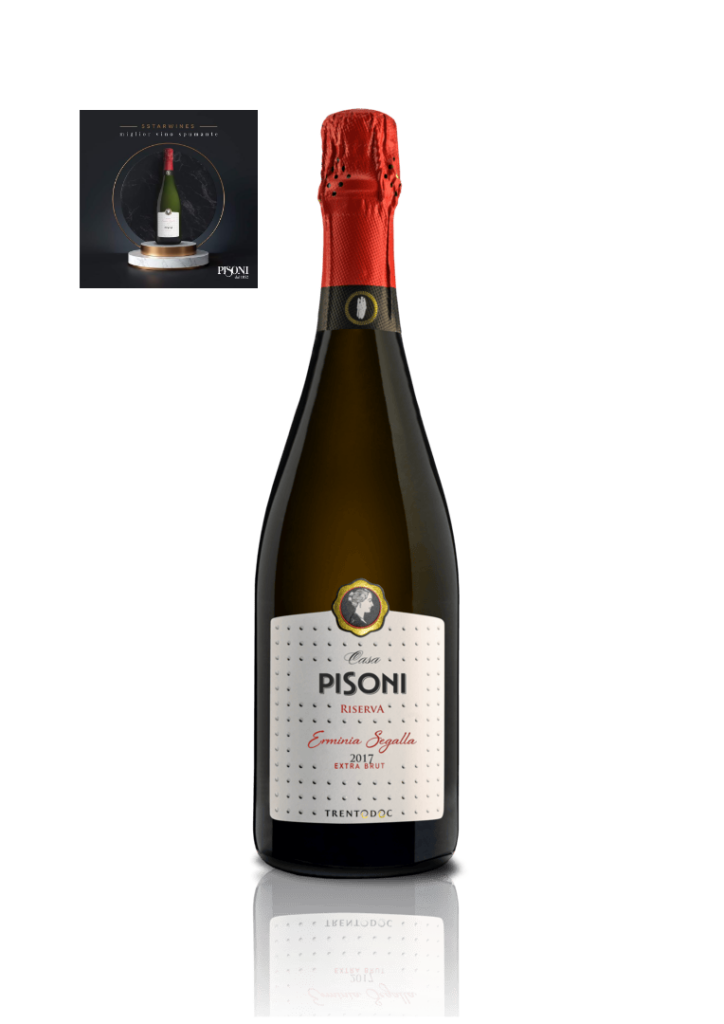
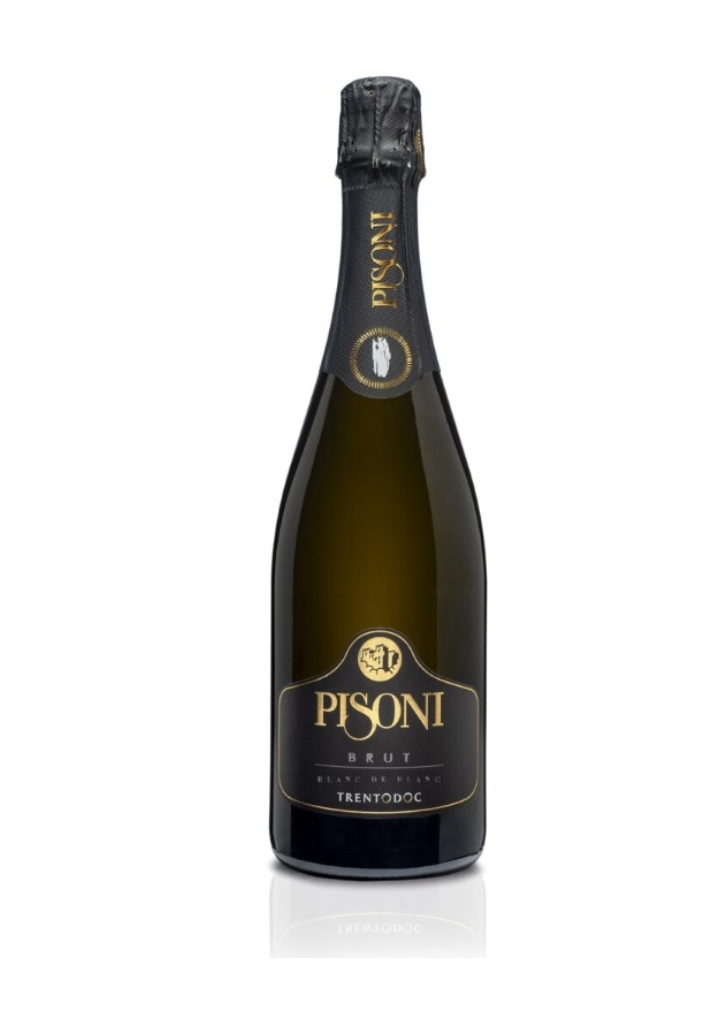
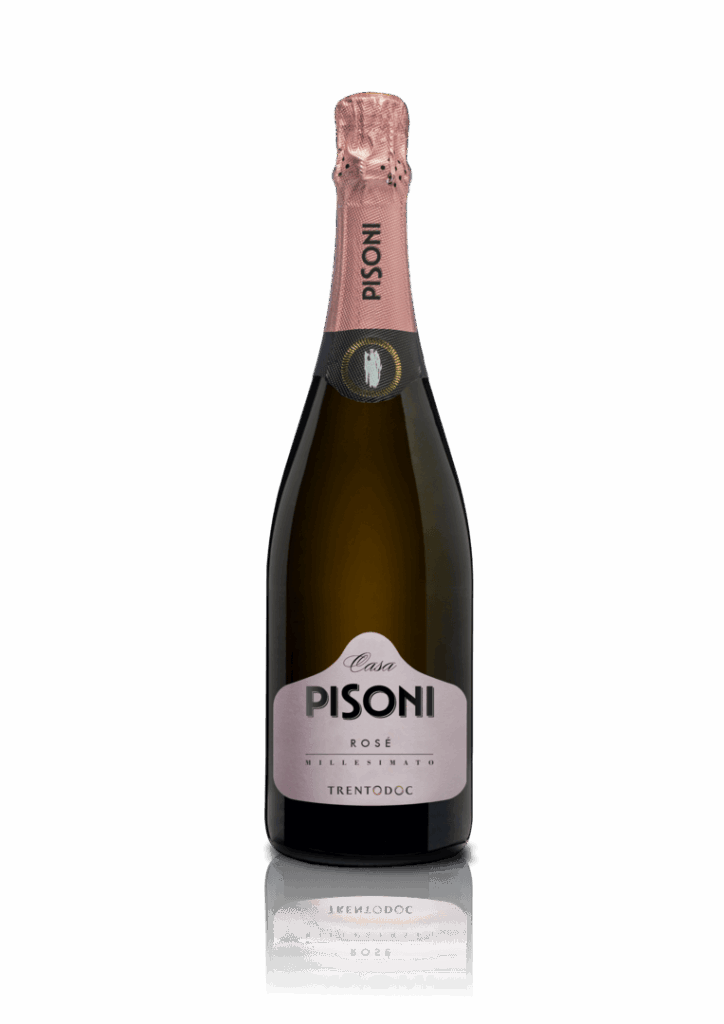
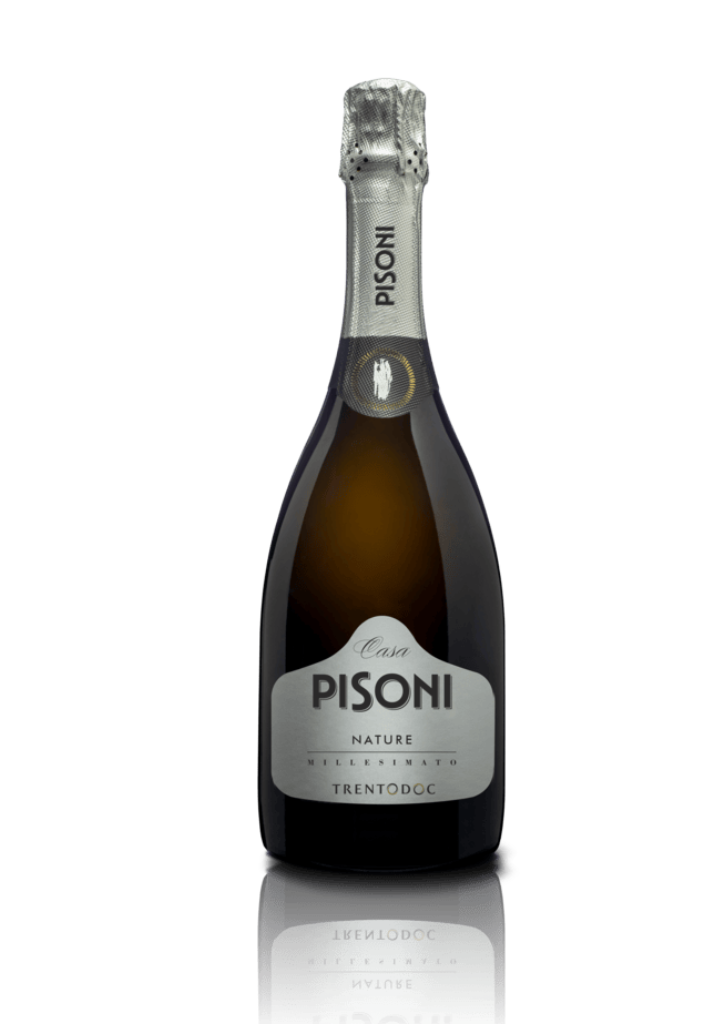
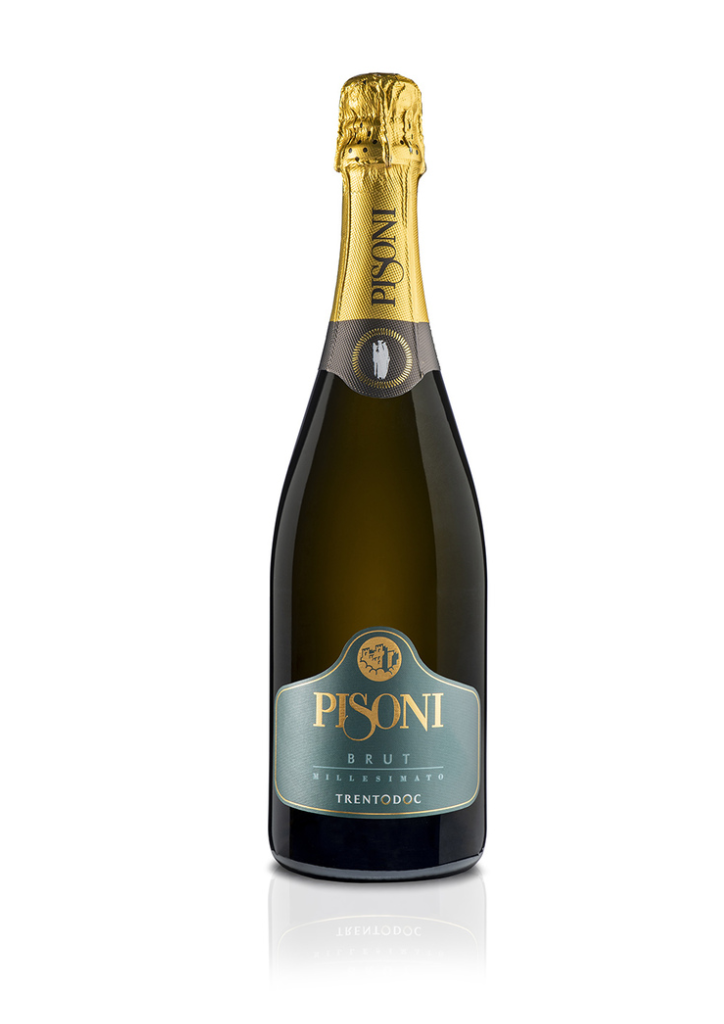
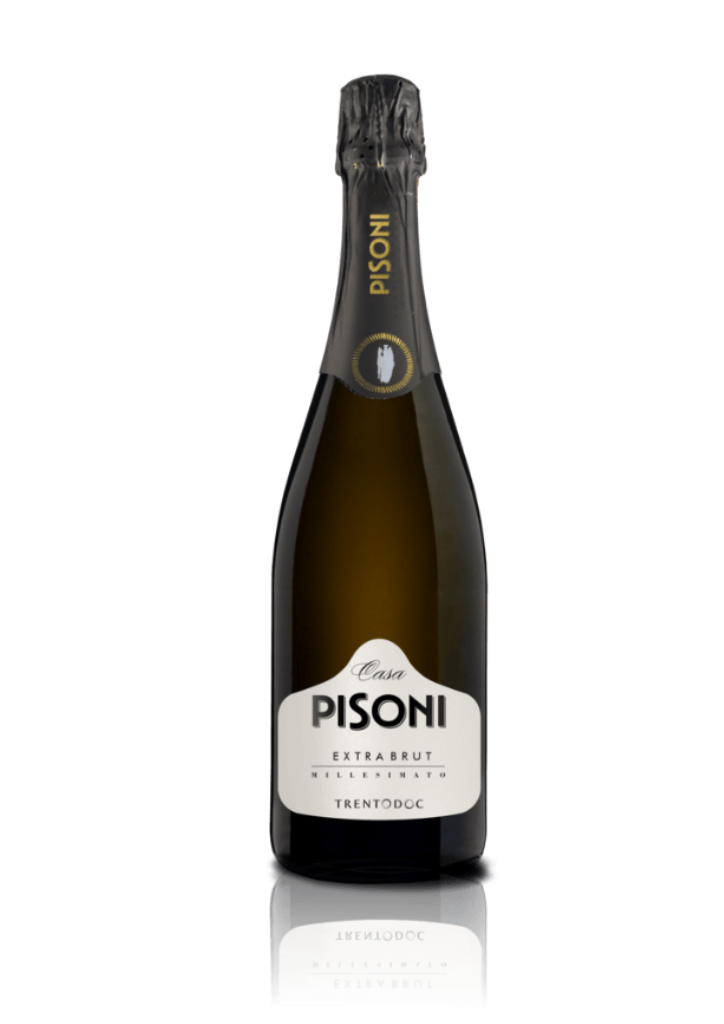
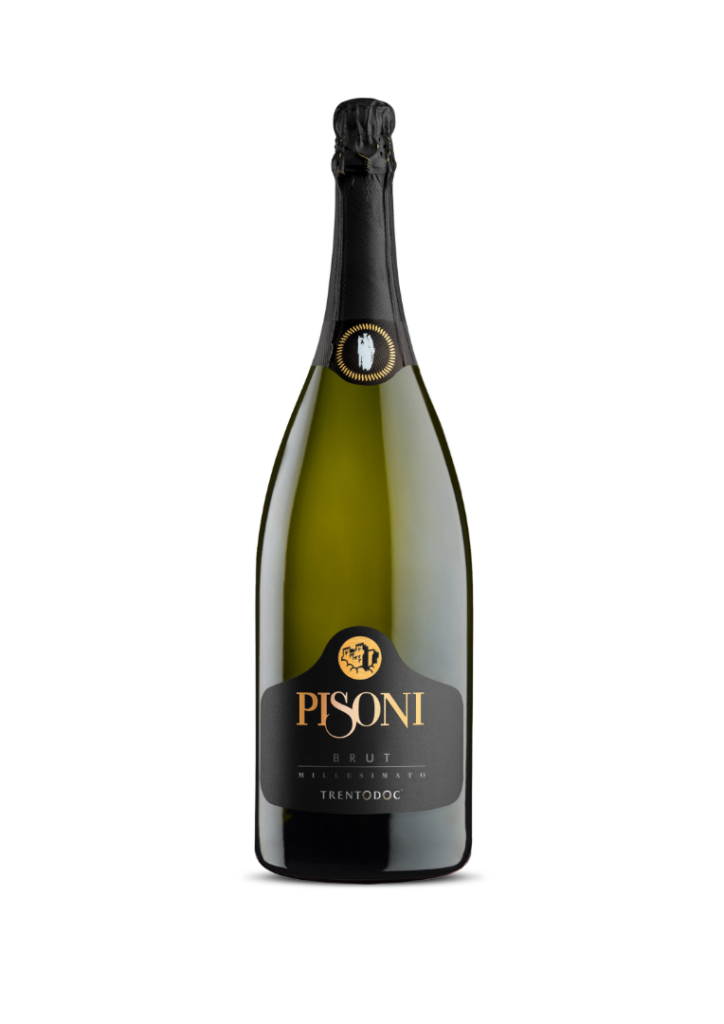
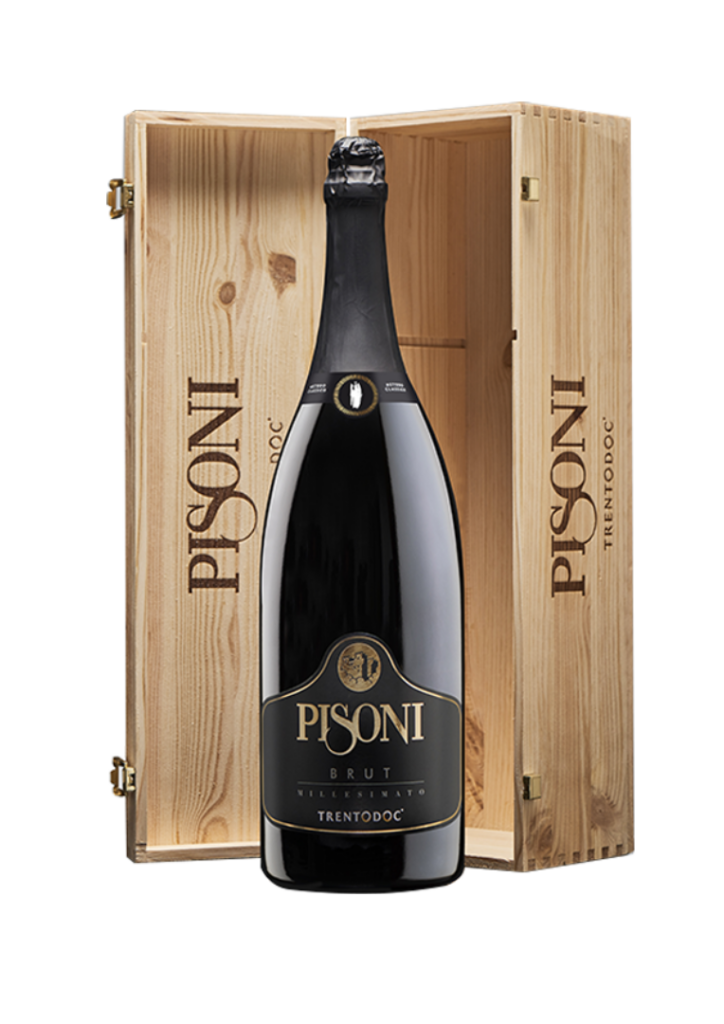
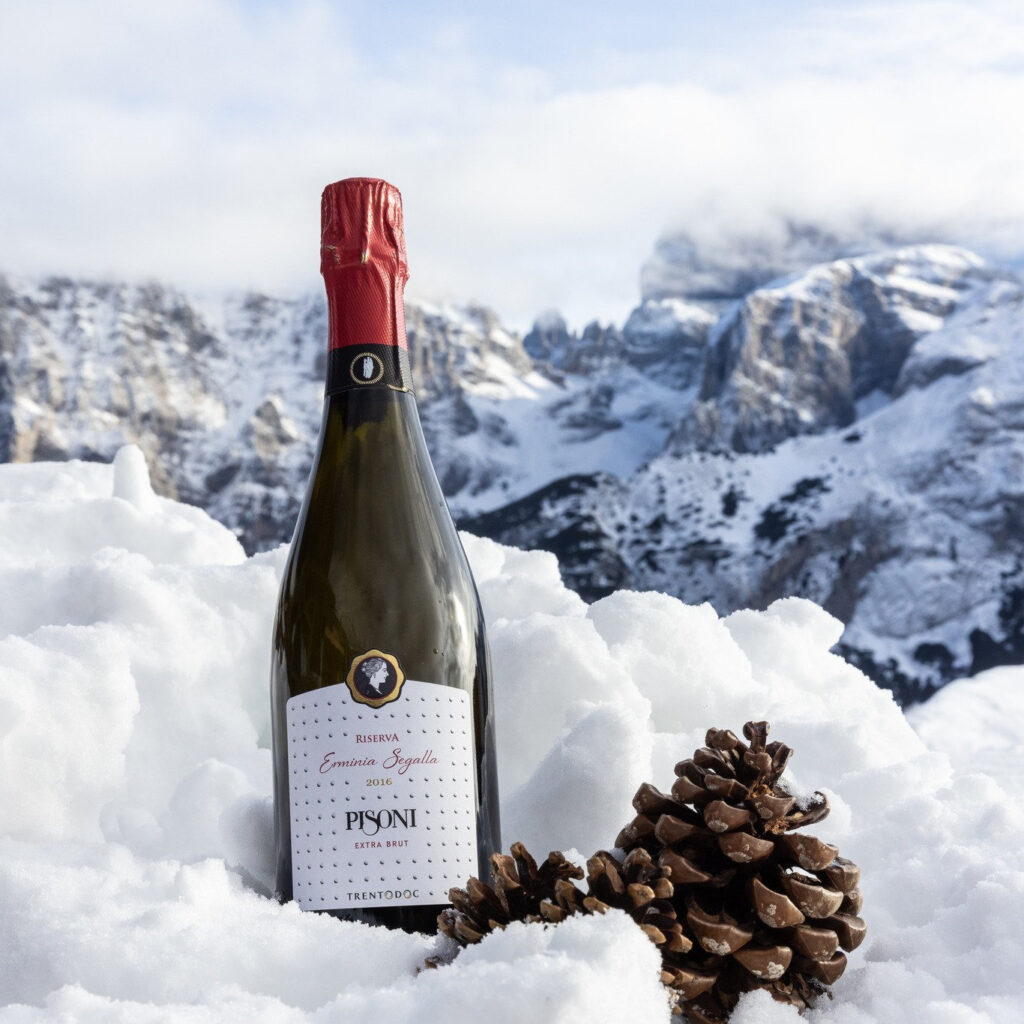
Discover our selection of TRENTODOC sparkling wines, including our Pisoni Riserva Erminia Segalla, winner of Best Sparkling Wine at Vinitaly 2020, and the recent winner of Gambero Rosso’s 3 Glasses, our Pisoni Blanc de Noir TRENTODOC.
The Trentodoc metodo classico sparkling wine was born from the brilliant intuition of Giulio Ferrari, a young winemaker from the Agricultural Institute of San Michele all’Adige, who, during his educational travels, noticed a similarity between the Champagne region, a historic French province known for producing the eponymous wine, and Trentino.
From that moment on, a long story began, reviving a tradition whose earliest traces date back to 3000 BC. This has led to this great Trentino sparkling wine being recognized as a DOC product in 1993 and enjoying the significant support of the San Michele all’Adige Foundation, now the Edmund Mach Foundation, which for years has been a key development center for the Trentino viticulture sector and a breeding ground for internationally renowned winemakers.
The success and uniqueness of Trentodoc sparkling wine lies in the characteristics of the terroir from which it originates: the combination of climate, varying altitudes, and terrain make Trentodoc not just a simple sparkling wine, but a true mountain sparkling wine, recognized by specific studies and awards over the years.
The Trentino region, despite being relatively small, is covered by 10,000 hectares of vineyards, with 8% of the grapes destined for sparkling wine production and a total production of approximately 12-13 million bottles per year.
All these grape varieties benefit from the most varied climate, from the mountain microclimate to the milder Garda climate, and the precious influences of the different altitudes that characterize the Trentino mountains.
The altitude of the vineyard plays an important role in grape ripening, influencing its acidity between veraison and harvest.
The temperature range is also crucial for the full development of healthy, aromatic grapes and the corresponding organoleptic properties of the wines; in this regard, the Alpine climate of Trentino appears to be optimal.
A large part of Trentodoc’s success certainly lies in its production method, which follows the “classic method,” a process that requires great skill and time due to its numerous steps.
Unlike a simple still wine, in fact, the Trentodoc classic method sparkling wine requires a production period ranging from a minimum of 15 months to over 10 years for a great reserve.
The numerous phases that create this “classic method” are also very interesting: it begins with the production of a base still wine, resulting from the harvest of Chardonnay, Pinot Noir, Pinot Blanc, or Pinot Ménieur grapes, to which yeasts and sugars are added. After bottling, the wine is aged in the bottle, where the yeasts initiate a second fermentation (the first occurs during the transformation from grape to wine). This is precisely why classic method sparkling wines are defined as wines with refermentation in the bottle.
The third phase is the secondary fermentation, a term that indicates the moment in which the anhydride, the result of the previous phase of secondary fermentation in the bottle, develops, ensuring the characteristic perlage of a classic method sparkling wine.
The maturation period is also crucial, of course: it ranges from a minimum of 15 months for a brut, to 24 months for a vintage, to 36 months for a reserve. It’s worth noting that Trentodoc producers extend the maturation period beyond the limits prescribed by the regulations in order to maximize the wine’s organoleptic characteristics, creating a one-of-a-kind sparkling wine.
Finally, we come to the important phase of remuage, a phase of the classic method sparkling wine production, which involves arranging the bottles on special wooden racks, called pupitres, which aid in the daily remuage: that is, every day the producer must rotate and shake the bottles to ensure that the spent yeasts and residues collect towards the neck of the bottle.
After this delicate step comes the disgorging of the sparkling wine, or degorgement, which involves removing the residual yeasts that have accumulated near the neck of the bottle through riddling. This can be done in two ways: à la glace, a mechanical method that involves freezing the neck of the bottle and popping the cork, or à la volée, which involves manually uncorking the bottle.
After disgorging, the sparkling wine is topped up with fine wine and sugars.
All these numerous steps clearly demonstrate how precious and pampered this prized product is.
Trentino viticulture has always been associated with the pergola system, which remains the most common vine training method. This method originated in Trentino to ensure adequate sun exposure for the vines, which are mostly grown on slopes. It also facilitates positioning on the terraces, pruning, and tying the shoots.
To determine the harvest date, agronomists consider the acidity, sugar content, mineral salts, and aromatic compounds contained in the grapes.
The Trentodoc classic method sparkling wine is produced in the Brut, Millesimato and Riserva versions, or in Rosé.
This site uses technical and profiling cookies.
You can accept, reject, or customize the cookies by clicking the desired buttons.
By closing this notice, you will continue without accepting.
Privacy Settings
This website uses cookies to improve your experience while you navigate through the website.
View the Cookie Policy View the Personal Data Policy
Google Analytics is a web analytics service provided by Google Ireland Limited ("Google"). Google uses the collected personal data to track and examine the usage of this website, compile reports on its activities, and share them with other Google services. Google may use your personal data to contextualize and personalize the ads of its advertising network. This integration of Google Analytics anonymizes your IP address. The data sent is collected for the purposes of personalizing the experience and statistical tracking. You can find more information on the "More information on Google's handling of personal information" page.
Place of processing: Ireland - Privacy Policy
Google Maps is a maps visualization service provided by Google Ireland Limited. This service is used to incorporate content of this kind on its pages.
Place of processing: Ireland - Privacy Policy
Gravatar is an image visualisation service provided by Automattic Inc. that allows this Website to incorporate content of this kind on its pages.
Place of processing: United States - Privacy Policy
Trustindex widget is a content visualisation service provided by Trustindex Ltd that allows this website to incorporate content from that external platform on its pages.
Place of processing: Hungary - Privacy Policy
